
Birthday Party Games for Kids by Age & Group Size
Birthday party games for kids work best when the rules match the children’s age, the format matches the group size and the energy level fits the moment in the party. The same game can feel exciting with eight children and chaotic with twenty.
This guide gives you 24 practical game structures organized by age, plus a group-size system, setup notes, timing, adaptations and a complete two-hour game flow. The goal is not to fill every minute. It is to choose a small number of games that are easy to explain, fair to join and simple to manage.
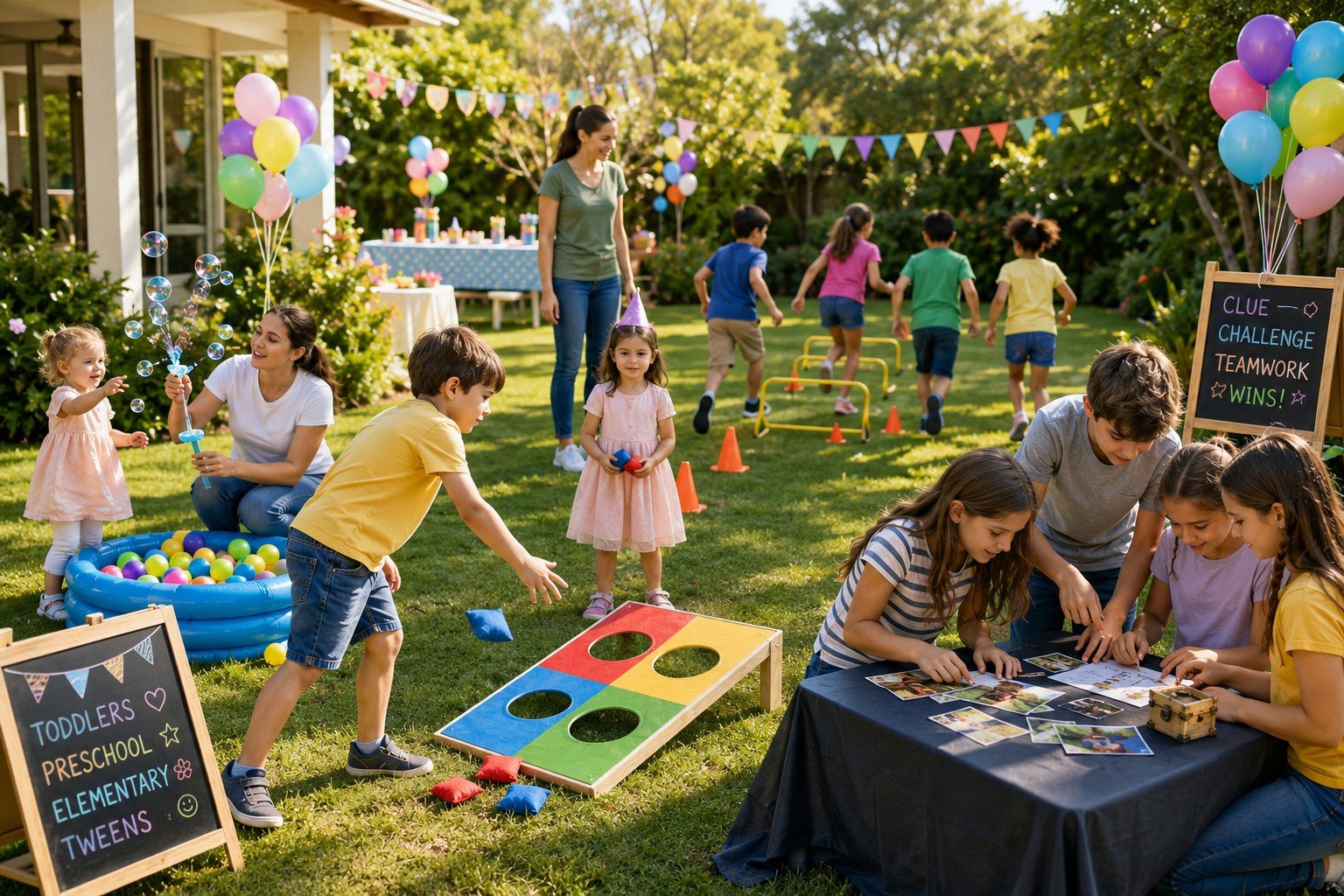
Check five variables before choosing an activity: age, group size, physical space, rule complexity and waiting time. A game that fails one of these tests usually creates confusion even when the idea sounds fun.
How to Choose Birthday Party Games for Kids
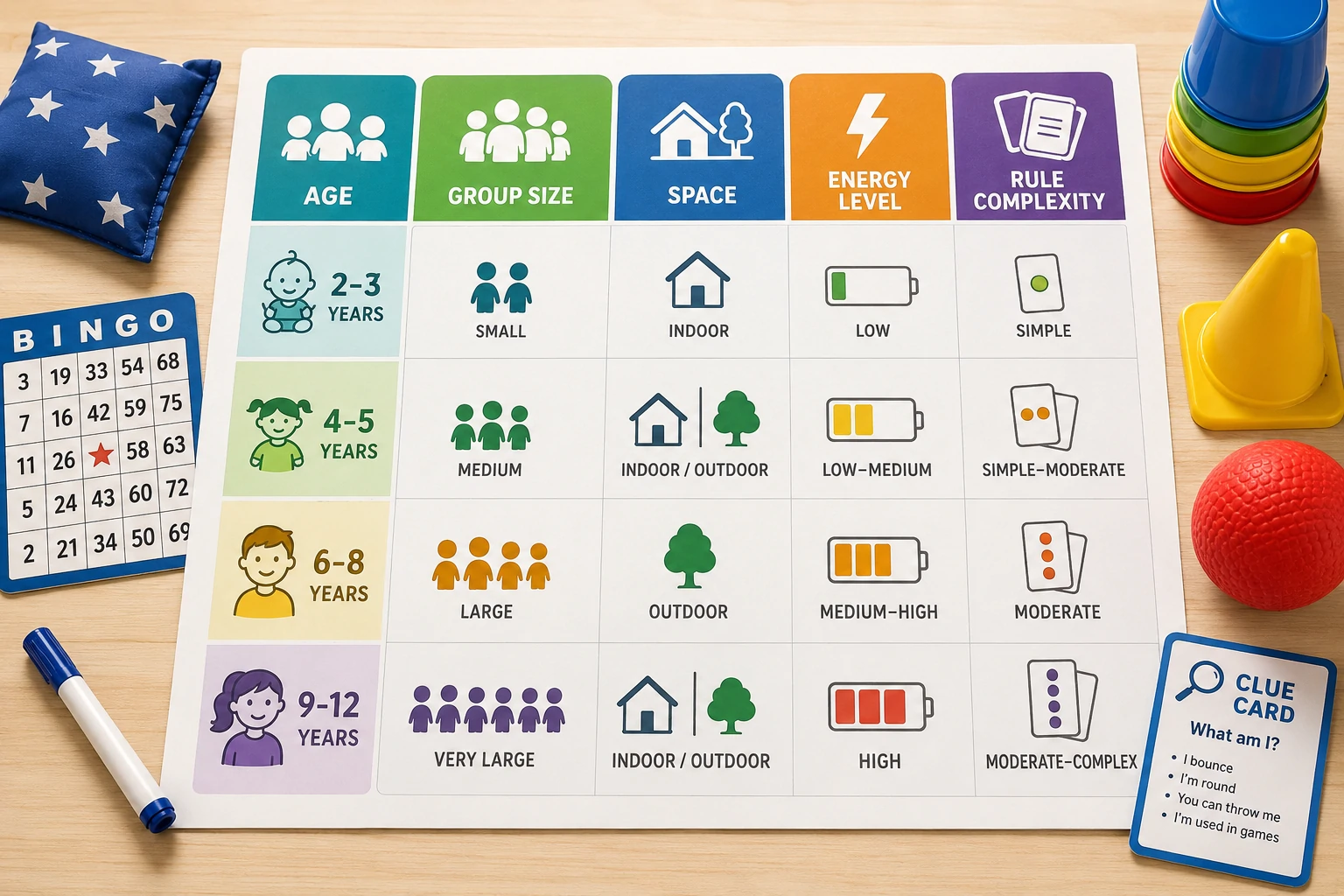
| Age | Best structure | Useful round length | Avoid |
|---|---|---|---|
| 2–3 | Adult-led movement, sensory play and matching | 5–8 minutes | Long turns, elimination and tiny pieces |
| 4–5 | Pretend play, visual clues and cooperative circles | 8–12 minutes | Hidden rules and long explanations |
| 6–8 | Short teams, stations, drawing and clues | 10–20 minutes | One-child-at-a-time formats for large groups |
| 9–12 | Strategy, puzzles, creativity and photo challenges | 15–35 minutes | Games with no meaningful choices |
Birthday Party Games by Group Size
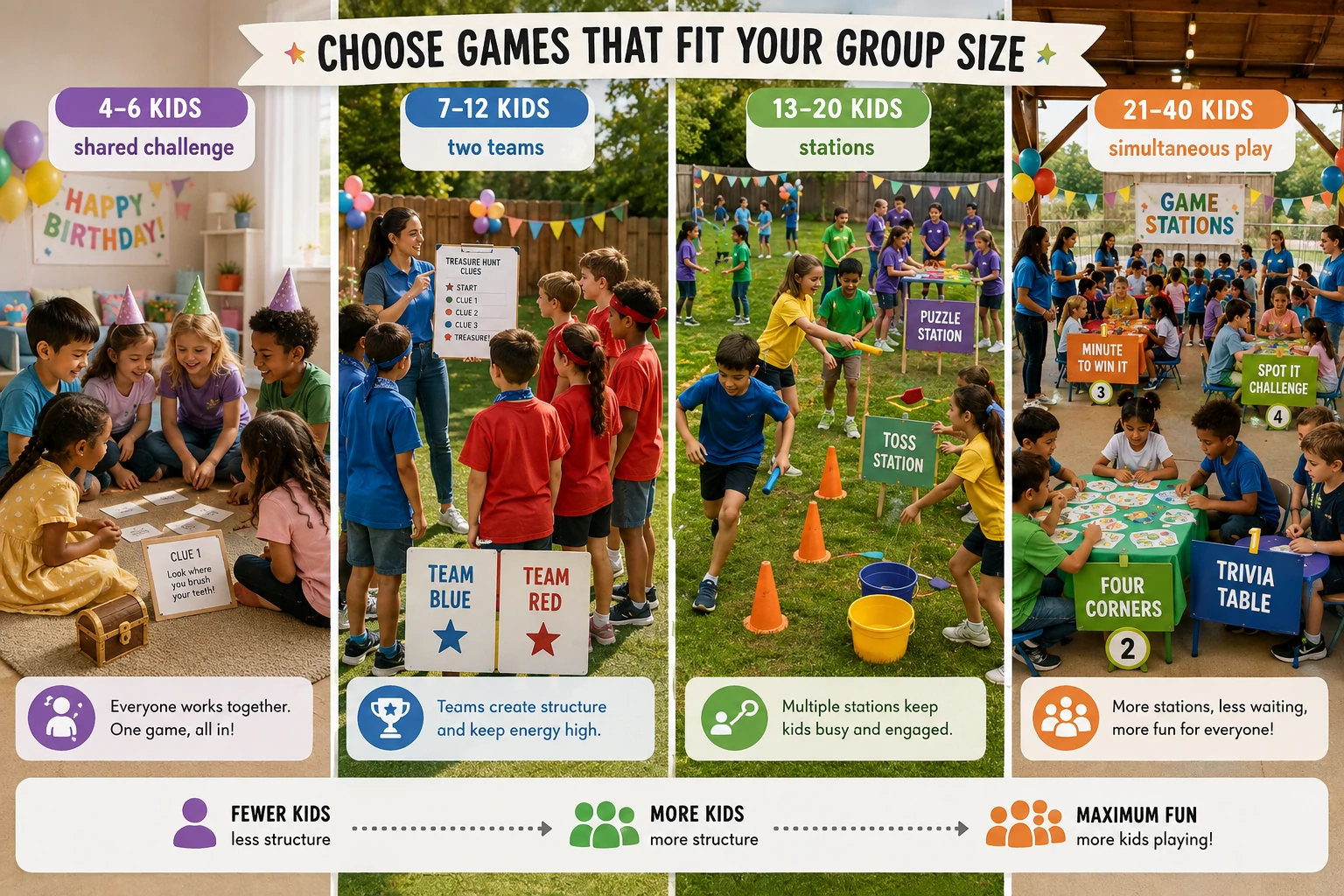
4–6 Kids
Use one shared challenge, conversation and repeat turns. Good choices include charades, soft ball roll, mystery build and photo hunt.
7–12 Kids
Create two teams or one circle. Keep individual turns under 30–45 seconds.
13–20 Kids
Use three or four teams, parallel lanes or rotating stations with one helper per zone.
21–40 Kids
Choose simultaneous-response games, visual signs and color teams. Add transition time.
Birthday Party Games for Ages 2–3
Use one-step directions, familiar movement and short turns. The adult models the action and participation is the goal.
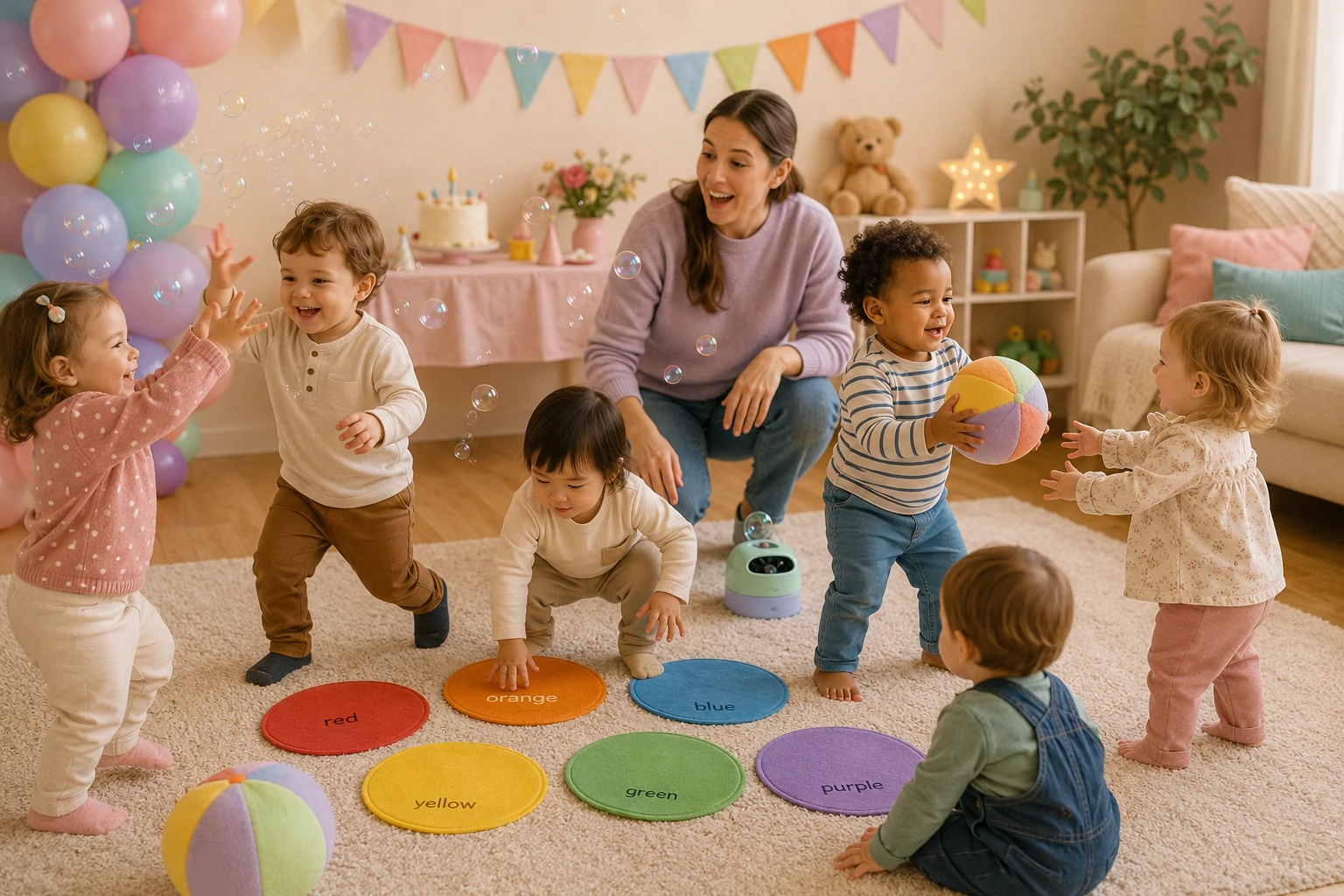
Bubble Chase
How to play: An adult blows bubbles while children pop, point to or follow them. Pause often so the group can reset and avoid crowding.
Make it work: For larger groups, use two adults at opposite sides of a marked play zone.
Animal Movement Parade
How to play: Show one card at a time and invite children to stomp, hop, waddle or crawl like the animal.
Make it work: Let each child choose one animal; do not turn it into a competition.
Color Touch
How to play: Call one color and ask children to walk to or touch the matching object. Keep all choices visible.
Make it work: Pair the color word with a gesture or matching card.
Soft Ball Roll
How to play: Sit in a circle and roll the ball to a named child. The receiver rolls it to someone else.
Make it work: With more than six children, create two circles to reduce waiting.
Freeze and Wiggle
How to play: Children wiggle, clap or march while music plays. When it stops, everyone freezes. Nobody is eliminated.
Make it work: Use obvious movement cues and keep the volume moderate.
Big-Piece Treasure Basket
How to play: Children explore a supervised basket and match objects to prompts such as soft, round or blue.
Make it work: Use one basket for every three children to reduce grabbing.
Birthday Party Games for Ages 4–5
Use visual clues, pretend play and simple team structures. Avoid long waits and early elimination.
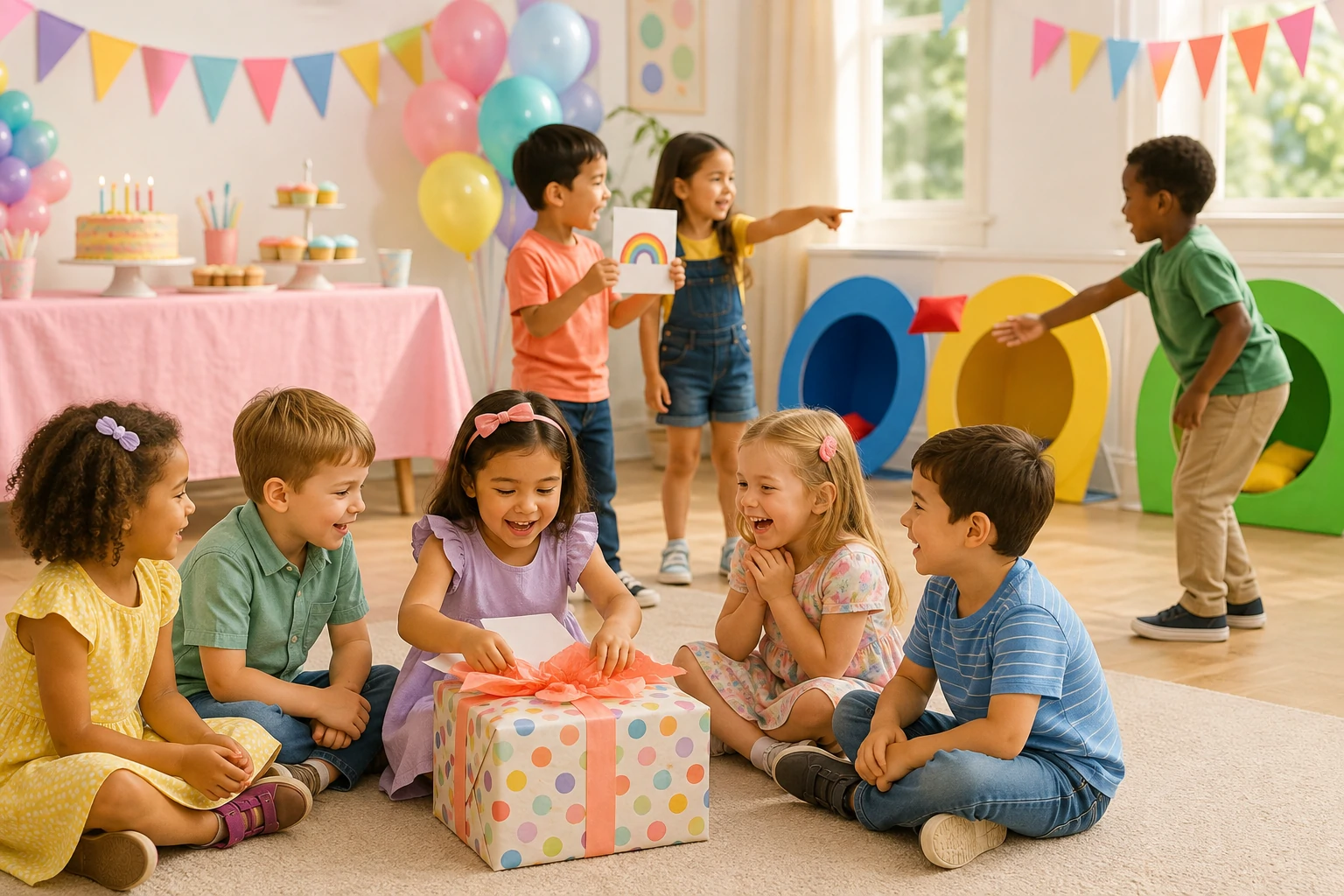
Musical Spots
How to play: Children move around the markers while music plays and stand on any spot when it stops. Keep every spot in play.
Make it work: Change the movement each round: tiptoe, march, hop or move slowly.
Picture Treasure Hunt
How to play: Children follow visual clues to find a final box containing stickers, party hats or the next activity.
Make it work: For more than eight children, use two color teams and duplicate clue paths.
Pass the Parcel Without Elimination
How to play: When the music stops, the child holding the parcel opens one layer and everyone completes the action together.
Make it work: Use actions such as clap five times, make an animal sound or say one kind thing.
Beanbag Color Toss
How to play: Each child tosses toward a matching target. Count shared team points rather than ranking individuals.
Make it work: Move the throw line closer for younger or less confident players.
Story Charades
How to play: A child chooses a card and acts out an animal, job or familiar activity while the group guesses.
Make it work: An adult can act alongside children who do not want to perform alone.
Follow-the-Leader Adventure
How to play: Guide the group through a pretend adventure: cross a river, climb a mountain or tiptoe past a sleeping dragon.
Make it work: Change leaders every minute, or keep one adult leader for a very young group.
Birthday Party Games for Ages 6–8
Children can manage clearer rules, points and roles, but rounds should still move quickly.
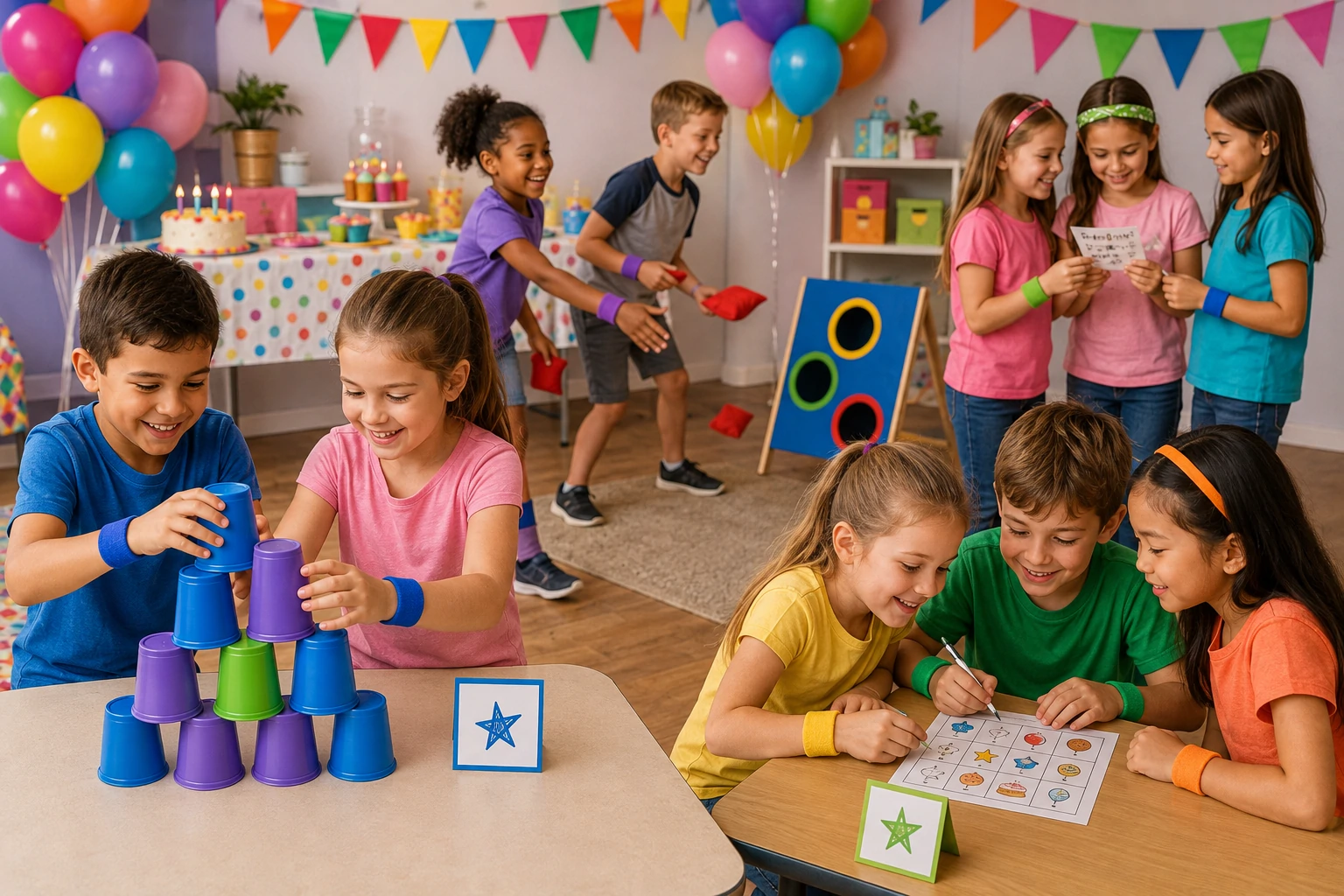
Mission Relay
How to play: Teams rotate through beanbag toss, balance walk, puzzle collection and target roll.
Make it work: Score completion, teamwork and encouragement—not speed alone.
Birthday Bingo
How to play: Use pictures or words connected to birthdays, the guest of honor or the party theme.
Make it work: Prepare several small prizes or play for a shared table reward.
Clue Trail Treasure Hunt
How to play: Teams solve riddles, matching tasks or simple codes that lead to the next location.
Make it work: For large groups, use parallel routes that finish together.
Four Corners
How to play: Ask a preference question and let children move to their answer. Invite a few explanations, then continue.
Make it work: Do not eliminate anyone; use it as a movement-and-conversation game.
Team Pictionary
How to play: Players draw a prompt while teammates guess before time expires. Rotate quickly.
Make it work: Use two teams for 6–12 children and three or four teams for larger groups.
Minute Challenge Stations
How to play: Small teams rotate through pom-pom transfer, ring toss, cup flip or puzzle assembly.
Make it work: Use one adult or older helper per station and post visual instructions.
Birthday Party Games for Ages 9–12
Older children respond well to strategy, choice, creativity and real team responsibility.
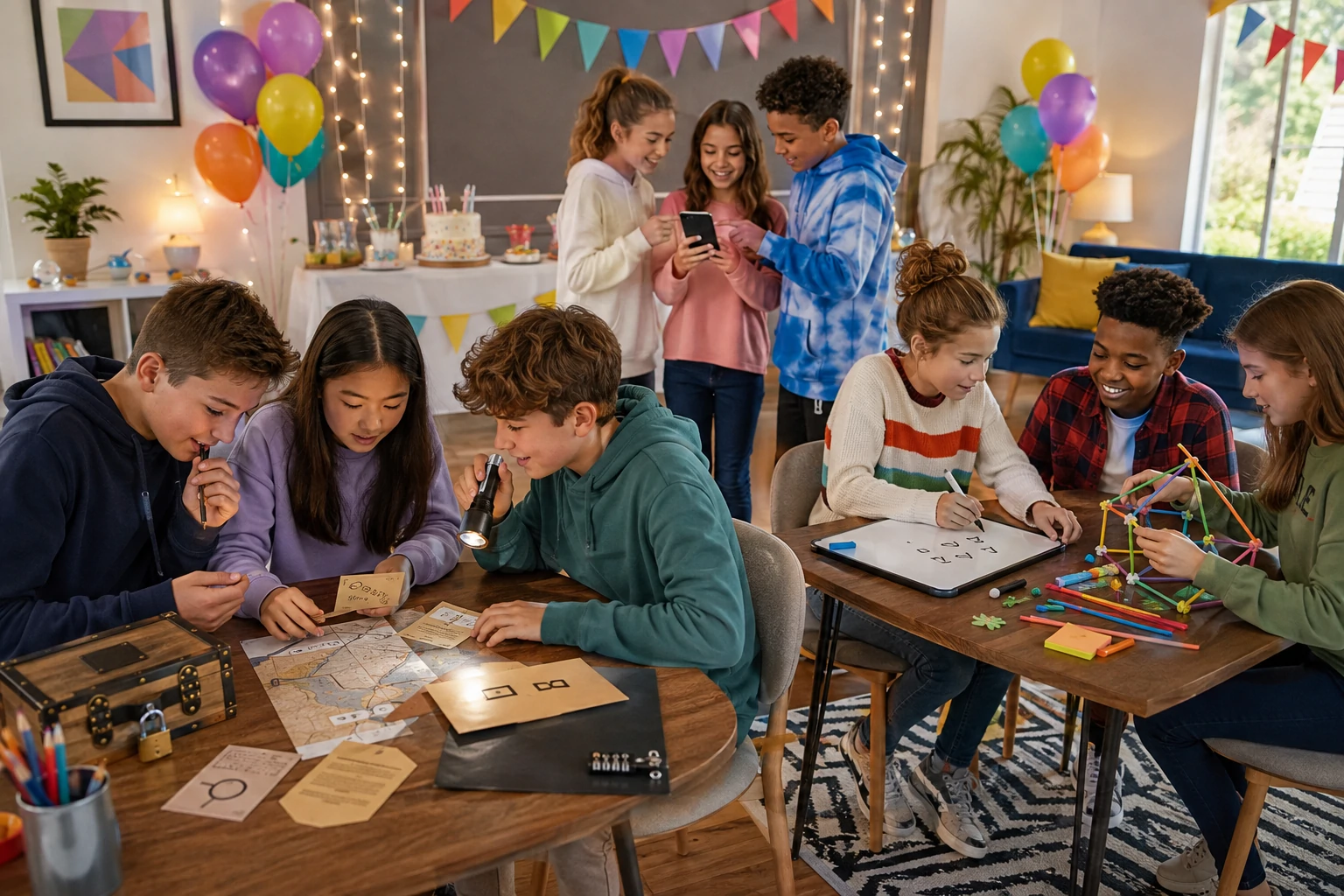
Photo Scavenger Hunt
How to play: Teams capture prompts such as a creative group pose, a color match or a forced-perspective photo.
Make it work: Set boundaries and avoid photographing people who have not agreed.
Puzzle Trail Mini Escape Game
How to play: Teams solve ciphers, matching puzzles and hidden messages to open a final envelope or box.
Make it work: Provide hint cards so the game keeps moving.
Team Trivia Showdown
How to play: Mix birthday-person trivia, riddles, pop culture and general knowledge.
Make it work: Use rounds with different strengths so one child cannot dominate.
Silent Line-Up
How to play: Without speaking, the group arranges itself by birthday month, height, alphabetical order or shoe size.
Make it work: Use a timed improvement round rather than ranking individuals.
Build-the-Commercial Challenge
How to play: Teams invent a product name, slogan and 30-second commercial using the objects they receive.
Make it work: Judge teamwork, creativity and clearest pitch instead of one overall winner.
Would You Rather Corners
How to play: Read a playful choice and let children move to one side. Invite brief explanations, then continue quickly.
Make it work: This works especially well for very large groups because everyone participates at once.
A Two-Hour Birthday Party Game Timeline
Use an energy curve instead of placing active games back to back.
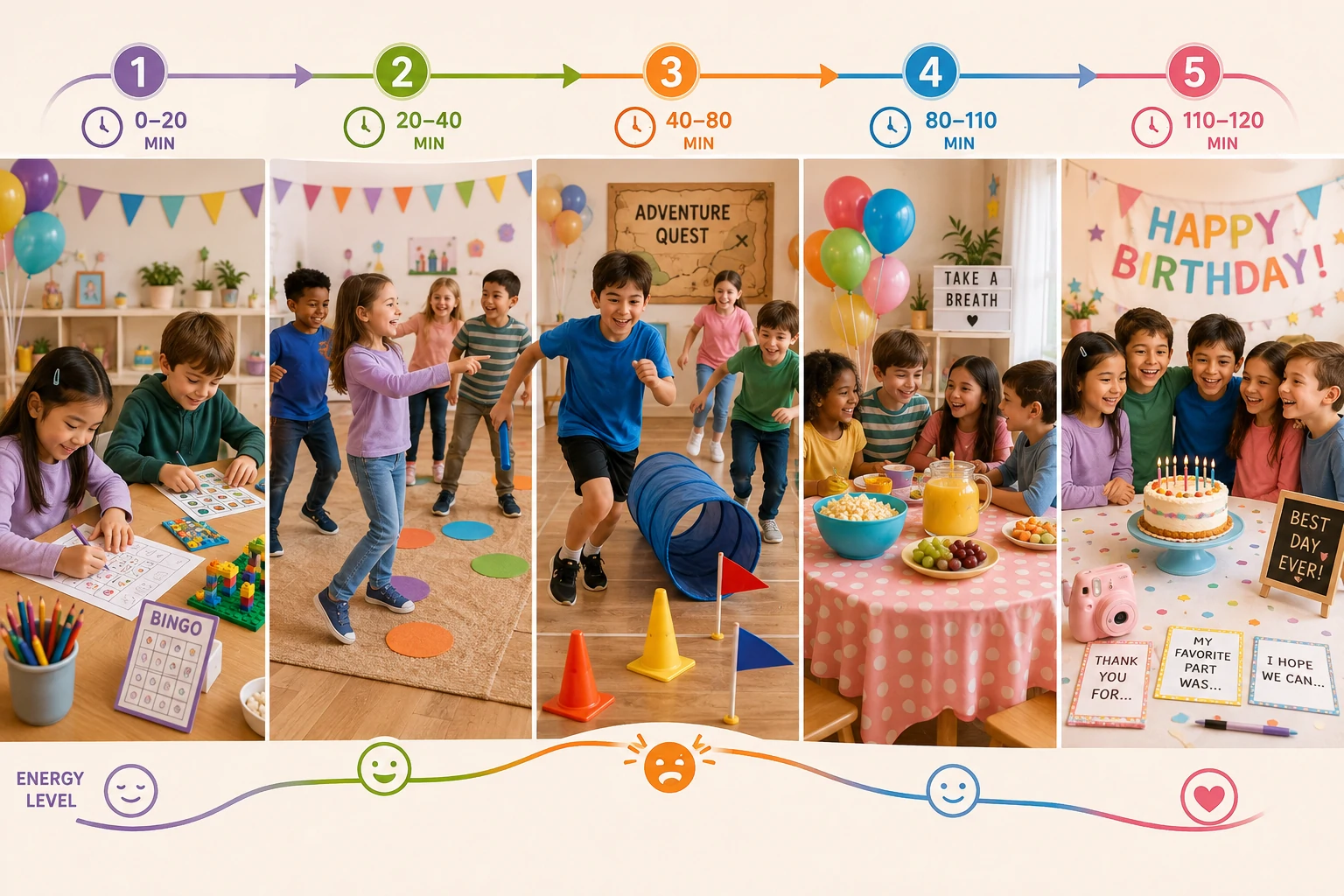
| Time | Phase | Best format | Purpose |
|---|---|---|---|
| 0:00–0:15 | Arrival | Coloring, sensory basket, bingo or simple build | Children can join at different times. |
| 0:15–0:30 | Warm-up | Freeze game, corners or follow-the-leader | Introduce the host and group rules. |
| 0:30–0:55 | Active peak | Relay, treasure hunt or stations | Use high energy before food and cake. |
| 0:55–1:15 | Reset | Food and drinks | Let children recover and reset the room. |
| 1:15–1:40 | Creative headline | Pictionary, trivia or puzzle trail | Use thinking and teamwork rather than speed. |
| 1:40–2:00 | Close | Cake, photo prompt or calm choice game | Finish with one shared moment. |
Use the Best Action Photos in a Birthday Frame or Collage
Games create natural party photographs: team celebrations, clue discoveries and surprised reactions. Use the Birthday template collection on MRRFrame to turn a small set of those images into a photo frame, collage, greeting or thank-you design.
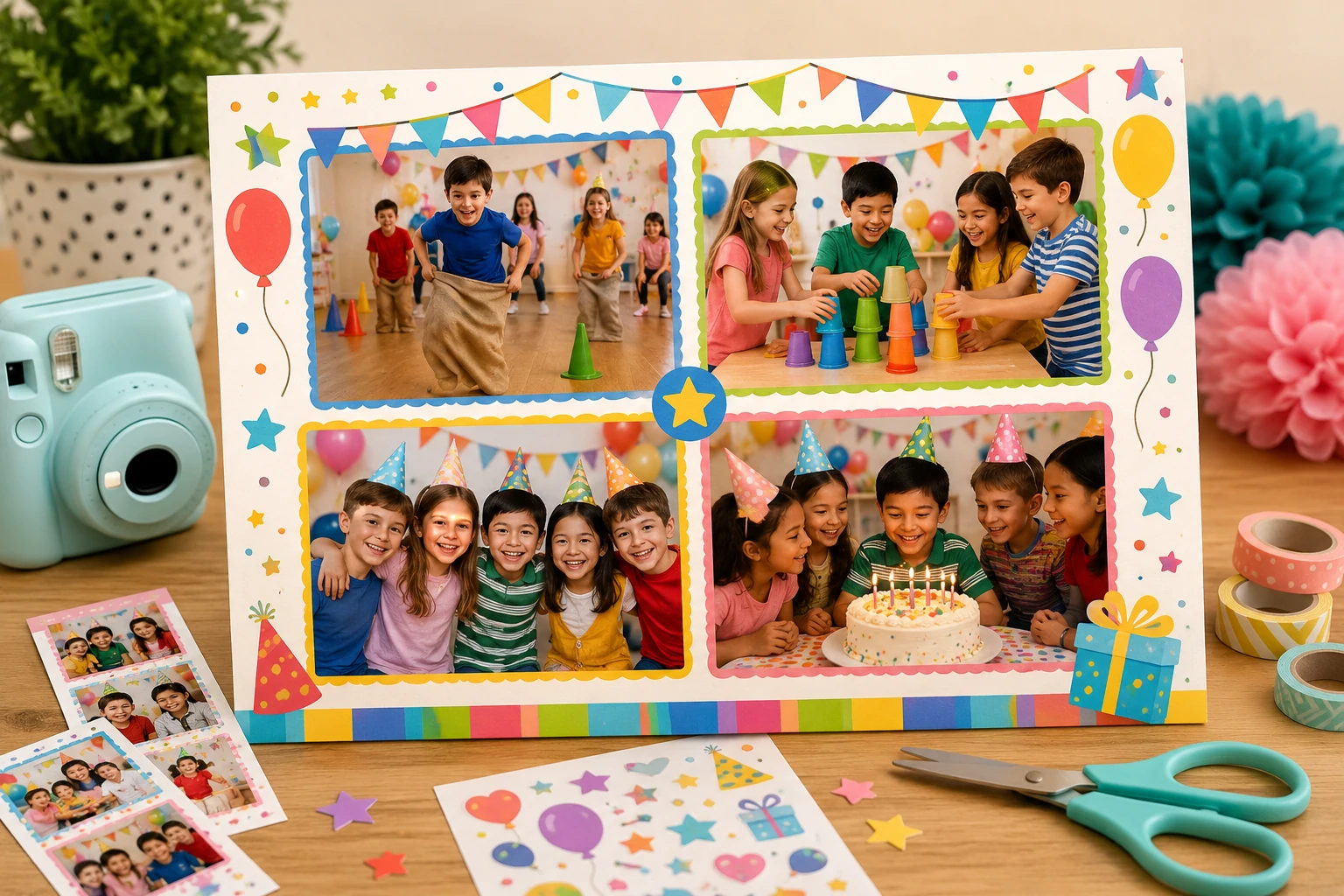
Best images: one group photo, one action shot, one birthday-child portrait and one team celebration.
Workflow: shortlist clear images, select a template, adjust the crop and add only the name, age or date.
Explore Birthday Photo Frame TemplatesBirthday Party Game Safety and Inclusion Checklist
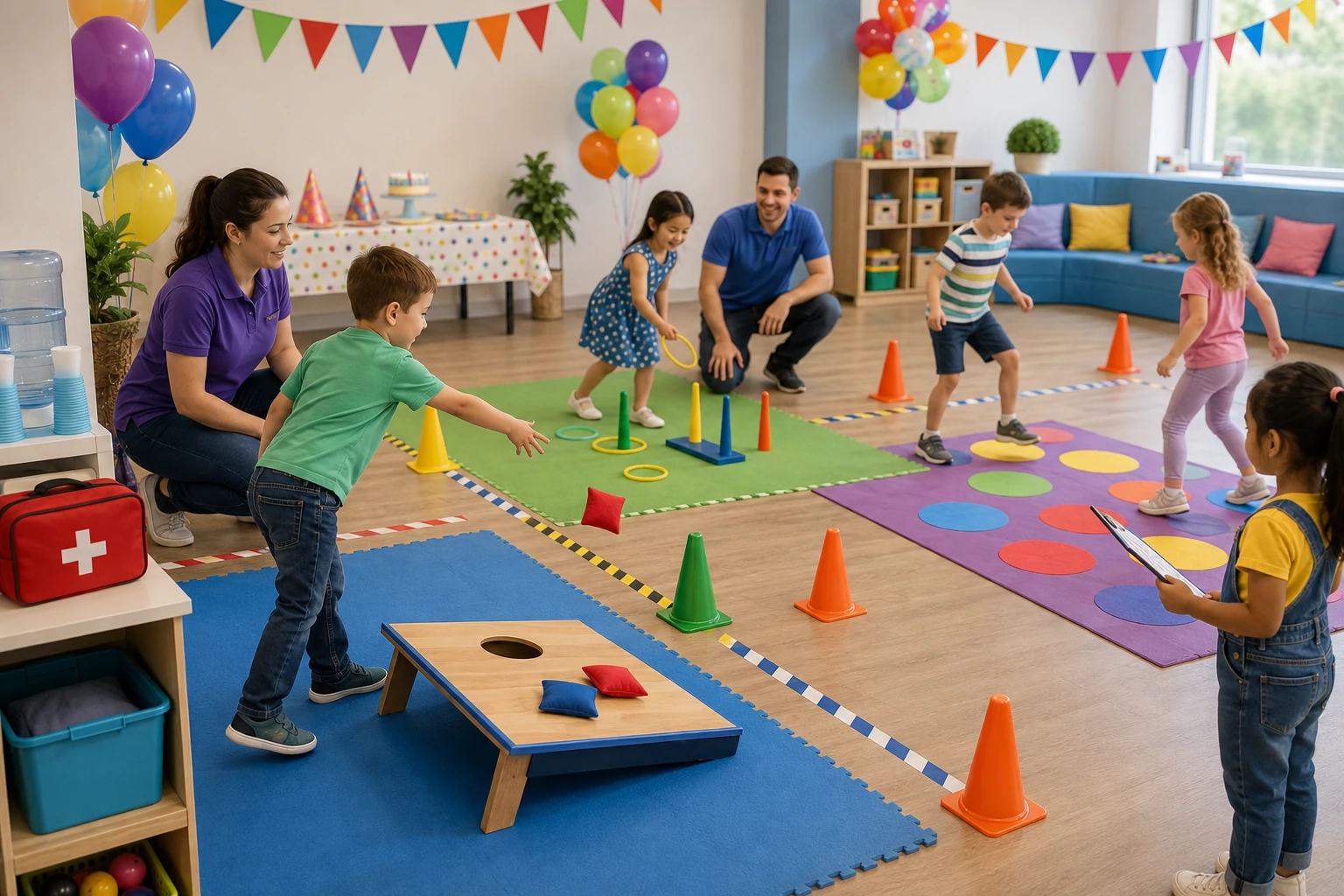
- Match equipment to the youngest child.
- Remove tripping hazards.
- Define boundaries clearly.
- Keep stairs, kitchens and pools outside the game area.
- Use large pieces for younger children.
- Offer a break or helper role.
- Avoid food-in-mouth races.
- Assign adults to active zones.
- Use cooperative scoring when possible.
- Remove broken equipment immediately.
The U.S. Consumer Product Safety Commission advises keeping small balls and toys with small parts away from children under three and keeping deflated balloons away from children under eight. Broken balloons should be removed immediately. Review the CPSC toy-safety guidance.
HealthyChildren.org recommends playful, developmentally appropriate and flexible activities for young children rather than forcing every child to complete every game. Read the birthday-party play guidance.
Frequently Asked Questions
How Many Games Do I Need for a Two-Hour Party?
Plan three main game blocks plus one flexible arrival activity. Keep one backup ready, but do not assume you must use it.
What Works for Mixed Ages?
Use picture treasure hunts, bingo, stations, team trivia and photo challenges with simpler roles for younger children and leadership roles for older children.
What Works in a Small Indoor Space?
Use bingo, mystery sounds, Pictionary, charades, cup stacking, trivia or a tabletop puzzle trail.
How Do I Manage 20 or More Children?
Use simultaneous-response games, rotating stations, visual instructions and three or four color teams.
Should Kids Be Eliminated?
For younger children, replace elimination with points, team goals or a new role. For older groups, use very short rounds and immediate re-entry.
What If a Child Does Not Want to Join?
Do not force participation. Offer a scorekeeper, clue-holder, observer or helper role and let the child join later.
Final Thoughts on Birthday Party Games for Kids
The best party game is the one children understand quickly, can join safely and still enjoy after the first round. Choose by age and group size, reduce waiting, alternate active and calm formats, and prepare one adaptation for every activity.
The age ranges and durations are practical planning ranges, not fixed developmental rules. Adjust them for the children, venue, accessibility needs, supervision and product instructions.